
Step 1: What exactly is a Liquid Crystal Diode (LCD) TV?
By Robert Wiley, Senior Editor
What exactly is a Liquid Crystal Diode (LCD) TV?
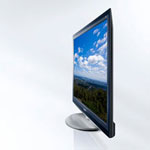 LCDs are all around us. Liquid crystal displays so prevalent, in fact, that most people couldn't get through their day without using one. This technology is utilized in digital clocks, microwave ovens, car dashboards, calculators, stereos, thermometers, and even some bathroom scales! The applications for liquid crystal displays are almost limitless, so it should come as no surprise that this technology has revolutionized the most basic home appliance of all-the television set.
Liquid crystal technology has given birth to those slim, cool-looking, bright displays that are popping up everywhere from bank lobbies to living rooms. But how does it work?
What makes a crystal "liquid"?
The twisted nematic (TN) liquid crystal is the most common type of liquid crystal being used in display applications today (e.g., LCD televisions, LCD monitors, and LCD projectors). It has a naturally twisted crystalline structure. A particular feature of this crystal is that it reacts to electric currents in predictable ways-i.e., by untwisting to varying degrees depending on the voltage of the current to which it is exposed. Hence the "liquid" part of the crystal's moniker: Rather than being an oxymoron (How can a solid also be a liquid?), the term refers to the relative pliability of the crystals themselves, which is to say, their twistability.
What type of Backlighting does an LCD TV have?
The type of backlighting is the determining factor in what people today call LED TVs. The backlighting until recently has been traditionally CFL flourescent backlighting. But more recently the backlighting has changed to the brighter and more luminous LED (light emitting diode) technology lighting. These LCD TVs with LED backlighting are technically still LCD TVs, but some have dubbed them "LED TVs," to emphasize the LED backlights.
8 steps to buying an LCD TV
- Step 1: What exactly is LCD TV?
- Step 2: How do LCD Televisions work?
- Step 3: What are the advantages of LCD Televisions?
- Step 4: What do you need to consider before you buy your LCD TV?
- Step 5: Installation Considerations
- Step 6: View the Top 10 LCD Televisions
- Step 7: How and Where to buy a LCD TV
- Step 8: Find reputable online LCD Televisions Dealers