





LCD TV ARTICLES |
|
Best TV CES 2016 10 Best LED TV and LCD Holiday Deals LED TV vs. LCD TV What is Motion Blur, Judder reduction, Motion Lag and Game Lag? What is Dynamic Contrast Ratio vs. Native Contrast Ratio? What is TV Viewing Angle, Side Angle Viewing, Off Axis Viewing? HDTV Glossary, Terms and Concepts 2010 TV Fact Sheet Contrast Ratio: Are Manufacturer Specs Important? LCD TV Response Time: Why it's Important LCD vs. Plasma How to Calibrate Your LCD TV 3D TV Explained
|
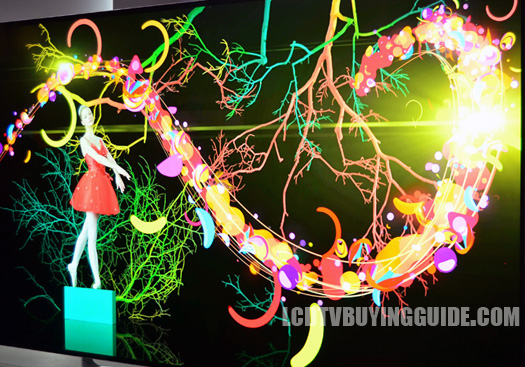 The 2016 TVs shown at CES 2015 were almost all high end 4K UHD TVs. Most were LED backlit LCD Panels, which is a disappointment. LG was the only manufacturer to forge forward with OLED 4K...
  Robert Wiley's top TV choices for Holiday sales and deals for 2011. He has mixed up the sizes to give you plenty of choices...
  The display screen on a LED is a liquid crystal display the same as it is on any other LCD TV. The main difference between the two lies with different backlighting techniques.
  These terms deal with phenomena related to motion resolution or otherwise incorrectly called motion enhancement that are prevelent and obvious in LCD TV technologies - though it can occur in any TV technology.
  Contrast ratio is the ratio between the brightest white and the darkest black. One of the problems with this is that there is no standardized testing procedure.
  Viewing angle refers to the off angle axis when moving away from 0 degrees on axis in front of a TV. View angle is important to understand because many TV's picture quality degrades the more you move off the center axis.
  Can't tell 120Hz from a Dynamic contrast ratio? Confused when reading features on new HDTVs? See our glossary of HDTV terms
  Neilsen recently released it's 2010 Media Fact Sheet and we wanted to pass along some of the TV related numbers we found interesting.
  Contrast Ratio is defined as the measure of the brightest white to the darkest black and is expressed as the number of shades of gray in between.
  One of the specs you'll see when researching an LCD TV is response time. This represents the amount of time it takes for one pixel to go from active to inactive and back
  Factory settings on TVs are almost always tweaked to maximum brightness and contrast and are enabled with image "edge enhancement" features as well.
  As good as the picture is on HDTVs, the picture is still 2 dimensional. Manufacturers are now making TVs that bring your viewing experience into the 3rd dimension.